
A security vulnerability is a weak point in a system that allows attackers to perform actions such as unauthorized access, data theft, manipulation, or denial of service. The consequences of these vulnerabilities create serious technical and operational risks.
Types of Security Vulnerabilities:
- Software Vulnerabilities: Coding errors or security weaknesses. For example, SQL injection, XSS (Cross-Site Scripting).
- System and Configuration Vulnerabilities: Misconfigured servers, default passwords, or outdated software. For example, open ports, old operating system versions.
- Hardware Vulnerabilities: Weaknesses in CPUs, IoT devices, or network hardware. For example, Meltdown, Spectre.
- Human-Related Vulnerabilities: Human errors or insider threats. For example, using weak passwords, falling for phishing attacks, misconfigurations.
- Network Vulnerabilities: Weaknesses in network protocols or services. For example, services vulnerable to DDoS attacks, misconfigured VPNs.
Risk Management and Prioritization:
- Critical and urgent risks should be prioritized because not all security vulnerabilities are equally dangerous. Vulnerabilities that affect critical systems and have a high risk of exploitation should be addressed first.
- Standard methods are used to prioritize security risks. For example, NIST, ISO 27001, and CVSS (Common Vulnerability Scoring System) can be used to assess the severity and priority of vulnerabilities.
Management and Policies:
Security is maintained through policies and procedures. For example, password policies, multi-factor authentication (MFA), and the principle of least privilege. The goal is to reduce human errors and ensure compliance while enforcing security standards. In short, regular audits and updates continuously monitor the effectiveness of these policies. This provides a systematic and continuous protection mechanism in cybersecurity.
What is the cybersecurity skills gap?
It is a situation where organizations cannot find employees who have the necessary knowledge, skills, and expertise to protect themselves against cyber threats. It includes both technical skill deficiencies and human-factor-related shortcomings. The cybersecurity skills gap is the difference between the number of qualified cybersecurity professionals needed in the industry and the number of available experts. In short, threats are rapidly increasing, but there are not enough experts to counter them.
Why does the cybersecurity skills gap occur?
- Attack techniques, malware, and attack surfaces are constantly evolving, and it is becoming harder for people to keep up with this pace.
- Although academic institutions, bootcamps, and certification programs in cybersecurity are increasing, the demand is still much higher than the supply.
- Companies often expect multiple areas of expertise from a single person, which makes the hiring process truly difficult.
- network security
- cloud security
- SOC analysis
- incident response
- security architecture
I want to give an example from myself. I completed a cybersecurity certification program, but since I don’t have experience, I can’t find a job—and because I can’t find a job, I can’t gain experience. Due to this cycle, I am unable to improve myself.
Consequences:
- Organizations become more vulnerable to attacks.
- Security operations slow down.
- Misconfigurations and human errors increase.
- Response times are prolonged, and the impact of attacks grows.
What are Human Factors?
In cybersecurity, human factors refer to the impact of human errors, behaviors, habits, and decision-making processes on security. No matter how advanced technology becomes, the weakest link in the security chain is the human element. A single wrong command can change everything.According to research, more than 75% of cybersecurity incidents are associated with human error.
Human-related risks include:
- Falling for phishing attacks
- Using weak passwords
- Sharing passwords
- Neglecting updates
- Failing to comply with privacy policies
- Being susceptible to social engineering attacks
- Misconfigurations
Relationship Between Skills Gap & Human Factors:
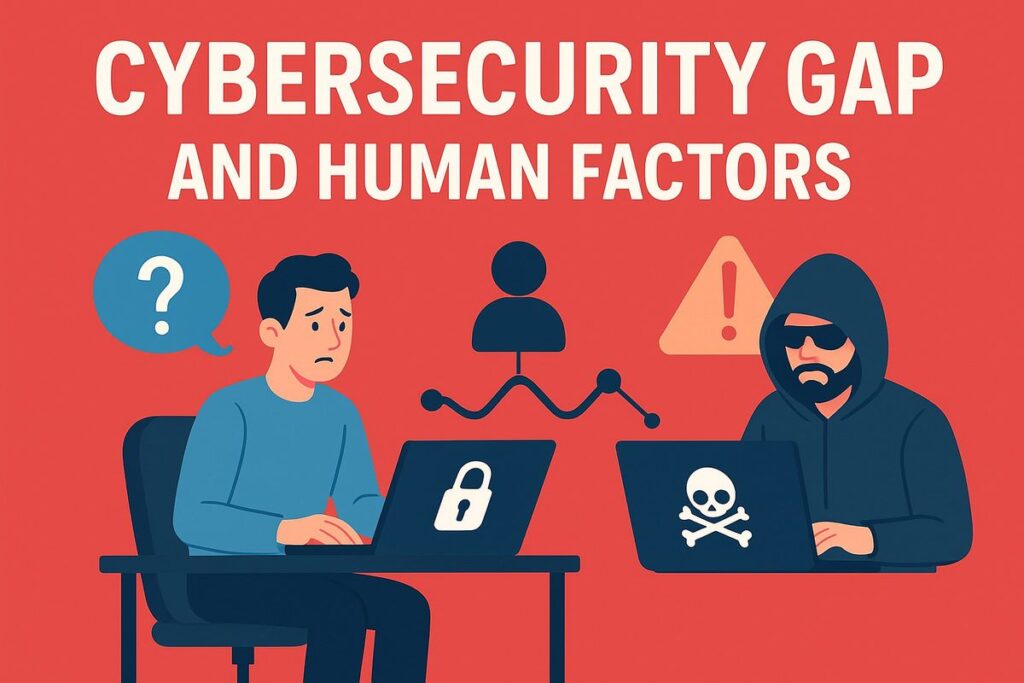
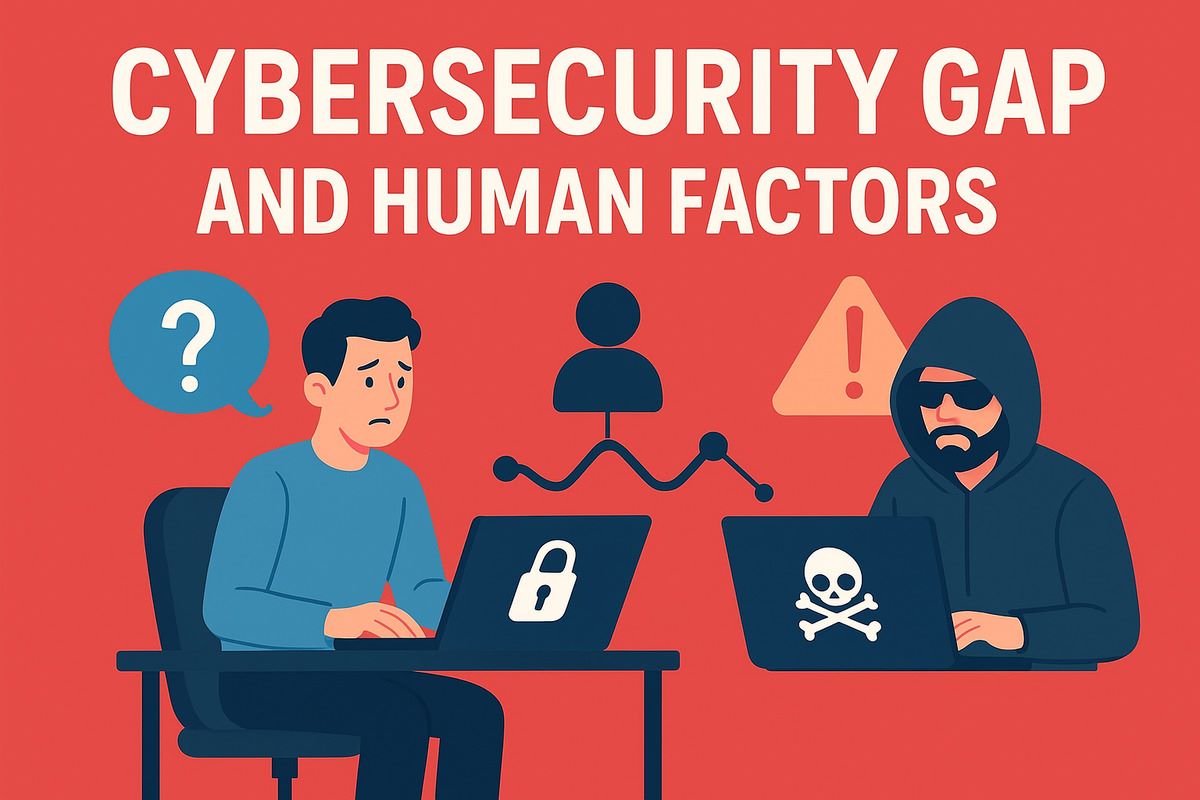
When there is a skills gap, human errors increase. When there are few qualified personnel, the workload rises, and unqualified individuals handle security tasks, resulting in more mistakes. These two issues are inherently interconnected.
Human factors further exacerbate security vulnerabilities, as individuals may fall for simple phishing emails or expose sensitive credentials. This situation makes the existing skills gap even more critical.
What Should We Do?
- Training and Awareness: Employees should receive basic security training, regular phishing simulations should be conducted, and password management education should be provided.
- Use of Artificial Intelligence: AI tools can help reduce the workload of Security Operation Centers (SOCs) and assist in anomaly detection.
- Skills Development: Training existing employees in cybersecurity and encouraging them to participate in certification programs such as CEH, CompTIA Security+, and CISSP is an effective approach for both personal and organizational growth.
- Human-Centered Design: Using supportive systems instead of forcing employees, adopting a human-centered security approach, and implementing user-friendly security policies are highly beneficial.
In conclusion, the cybersecurity skills gap refers to organizations’ inability to find enough qualified experts, while human factors show how human errors impact security. When considered together, it becomes clear that in modern cybersecurity, the greatest risks are not only technological but also stem from human and skills deficiencies. Cybersecurity is an area that requires careful attention, and encouraging employees to develop themselves in this field benefits both the organization and the individuals.
Contributed by GuestPosts.biz