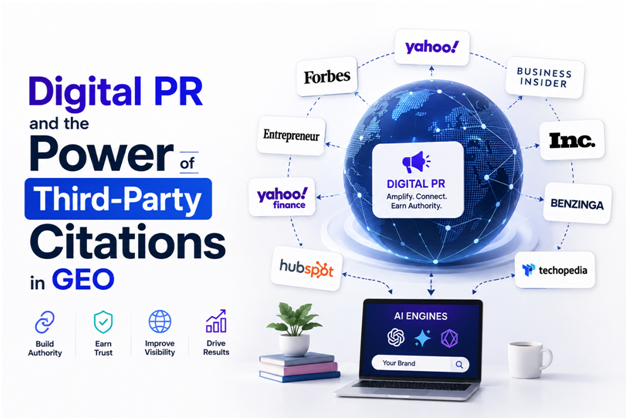

Let me ask you something. When you personally want to decide whether a brand is actually good at what they say they are good at – do you read their website, or do you ask someone who has used them? Do you check their own blog, or do you look for what other people have written about them?
Most of us do the latter. We trust outside voices more than inside ones. We look for reviews, recommendations, press coverage, forum discussions – anything that signals someone without a vested interest vouched for this brand. That instinct is not irrational. It is just common sense about how credibility actually works.
Here is the thing: AI engines operate on exactly the same logic. They are not naive enough to take everything a brand says about itself at face value. When a language model is building its understanding of whether your brand is a credible voice in a given space, it is leaning heavily on what other sources say about you. Not your own blog posts. Not your own press releases. The external, third-party record of how the world sees you.
This is why digital PR has quietly moved from a “nice to have” to a genuine pillar of GEO strategy. And if you are not treating it that way yet, this article is going to change how you think about it.
The Numbers Make a Strong Case – And They Are Hard to Argue With
I do not normally lead with statistics, but in this case the research is too striking to bury. A December 2025 analysis by Muck Rack found that 94% of AI citations came from non-paid, non-brand-owned sources. That is not a slight majority. That is almost everything.
A separate study by Superlines in 2026 found that brands are 6.5 times more likely to be cited by AI engines through third-party sources than through their own domains. Ahrefs analyzed 75,000 brands and found that branded web mentions correlate three times more strongly with AI visibility than backlinks do – which for anyone who spent years in traditional SEO chasing link equity, is a genuine recalibration.
And research from the University of Toronto, widely referenced across the GEO research community, confirmed that AI search engines show a systematic, structural bias toward earned media over brand-owned content. Not a slight preference. An overwhelming one. The researchers concluded that brands have to dominate earned media to build what they called AI-perceived authority.
None of this should be entirely surprising when you think about how these systems are designed. AI engines are trying to be reliable. They are trying not to get caught surfacing misinformation or promotional content dressed up as independent opinion. The safest thing they can do is weight sources that have gone through some form of editorial gatekeeping. And that is exactly what earned media provides.
What We Actually Mean by Third-Party Citations
Before we talk about how to earn these citations, it is worth being precise about what counts. Not all external mentions carry the same weight, and understanding the differences will help you focus your energy in the right places.
Editorial coverage in recognized publications
When a journalist at an industry publication writes a story that includes your brand – not a sponsored post, not a press release reprint, but an actual piece of editorial content – that is the clearest signal an AI system can receive about your credibility. The journalist’s name is attached. The publication’s reputation is behind it. There is an implied chain of accountability that brand-owned content does not have.
According to research tracking AI citation patterns, journalistic outlets account for around 27% of citations in AI-generated answers – making them the single largest source category. If your brand is getting genuine editorial coverage in publications your customers actually read, that coverage is doing double duty: building your reputation with human audiences and feeding the AI engines that those same people will increasingly rely on for recommendations.
Expert roundups and third-party comparisons
Review sites like G2 are consistently among the most-cited software platforms across ChatGPT, Perplexity, and Google AI Overviews. This is not an accident. When someone asks an AI engine which project management tool to use, the AI is going to look for sources that have already done the comparison work – aggregated real user reviews, weighed strengths and weaknesses, and produced something that feels balanced and credible.
Being present and well-represented on these comparison platforms is one of the most direct GEO investments you can make. A strong profile on G2 or Capterra, backed by genuine reviews, gives AI retrieval systems a credible third-party endorsement to pull from every time a relevant query comes in.
Practitioner recommendations in community spaces
Reddit threads, LinkedIn discussions, specialized forums, Slack communities – these are places where real practitioners share genuine opinions. When someone in a relevant community recommends your product because they actually use it and find it valuable, that mention registers as a credible signal in a way that even major press coverage sometimes cannot fully replicate, because it is coming from someone with direct experience and no editorial filter.
You cannot manufacture these mentions, and trying to fake them tends to be immediately spotted and deeply counterproductive. But you can earn them by being genuinely present in communities, being helpful without always steering conversations toward your product, and making sure that when people do have relevant experiences with your brand, they have easy ways to share them.
Academic and research citations
If any part of your work intersects with research – and more industries do than you might think – getting cited in academic papers, institutional reports, or serious analytical studies is one of the highest-quality citation signals you can build. Academic sources carry exceptional credibility in AI training data because they are extensively cross-referenced and subjected to peer scrutiny.
The practical path to this kind of citation is producing original research. Your own data, your own surveys, your own analysis. When you publish something genuinely original that other researchers or analysts need to reference, those citations accumulate over time and build an extraordinary foundation of AI-perceived authority.
Why Digital PR Has Always Had What GEO Needs Most
Here is something worth pausing on. The shift toward GEO has not actually changed what good PR does. It has revealed why good PR matters more than many people previously appreciated.
Sharad Agarwal, CEO of Cyber Gear and a regular contributor to AI Unplugged, put it clearly: GEO focuses on optimizing content so it can be discovered, understood, and referenced by AI systems. As he noted, companies that ignore this shift risk losing visibility in the next generation of search experiences, while those investing in it today are preparing for the future of digital discovery.
The core skills of effective PR – building genuine relationships with journalists, earning credible placements, creating content that external voices want to quote, training executives to give substantive and citable commentary – are exactly the inputs that GEO systems are looking for. PR has been building the thing AI engines value most for decades. GEO just makes that value more legible.
What has changed is the stakes. When a brand earns a placement in a respected industry publication, that coverage no longer just reaches the journalist’s readership and fades. It becomes part of the training data and retrieval pool that shapes what AI engines say about your brand for months or years to come. The coverage compounds in a way it never did before.
The PR Approaches That Actually Build GEO Authority
With that context in mind, let us get practical. What specific kinds of PR activity translate most directly into the third-party citation signals that GEO requires?
Earn coverage in sources AI engines actually pull from
The starting point is simple: figure out which publications, review sites, and platforms show up most consistently in AI answers for the queries that matter to your business. Run your key category questions through ChatGPT, Perplexity, and Google AI Overviews and pay attention to which sources are being cited. Those are your priority targets.
This sounds obvious once you hear it, but almost nobody does it. Most PR strategies are built around publications that feel prestigious or that have historically driven traffic, rather than publications that AI engines are actually drawing from. The two lists are not the same, and the gap between them is often significant.
Build quotable executives, not just brand messaging
AI engines are drawn to specific, expert-voiced claims. They prefer content where someone with clear credentials and direct experience says something concrete and verifiable – not where a brand’s marketing copy says something encouraging about their own offering.
This is where media training becomes a genuine GEO tool. An executive who can give a three-part response – context, specific insight, practical implication – when interviewed by a journalist is producing exactly the kind of quotable material AI systems want to extract and use. Coaching your leadership team to speak in specific, data-backed terms rather than polished but vague brand language has direct GEO consequences, not just conventional PR ones.
Original data is your most powerful outreach asset
When you have something nobody else has – your own data, your own research, your own findings from the specific vantage point your business occupies – you give journalists and analysts something genuinely worth referencing. They cannot get that data anywhere else. They have to cite you to use it.
The research does not need to be academic in scale. A survey of three hundred customers that surfaces a genuinely surprising insight about how people use your product category will earn more citations than a polished report full of industry statistics that everyone has already seen. Originality is what creates the citation incentive. The goal is to make your research the thing other writers turn to when they need to back up a point.
Commit to producing one piece of original research each year at minimum. Make it specific to something your business can speak to with genuine authority. Distribute it properly – with a clean landing page, a press release, and direct outreach to the journalists who cover your space. The citations it earns will compound for a long time.
Press releases built for how AI reads, not just how journalists read
Press releases still matter, and they matter in a slightly different way now. Journalists skim for narrative and quotes. AI systems scan for factual structure – who, what, when, with what specificity. A press release that is clear about what happened, includes precise numbers and context, uses consistent language to describe your company and product, and links back to a credible source gives AI retrieval systems clean material to work with.
One practical note: the language you use to describe your company in press releases tends to get picked up by journalists who cover the release, and then picked up by AI engines from that coverage. If you want to be known as a “cloud-based inventory management platform for mid-market manufacturers” rather than just “a software company,” be precise and consistent in how you describe yourself across every release. That specificity compounds.
Be a reliable source for reporters, not just a sender of pitches
The relationship model of PR produces better GEO outcomes than the transactional model, and the reason is straightforward: journalists who genuinely rely on you as a source will cite you more consistently, more accurately, and in more contextually relevant ways than journalists who only hear from you when you have something to announce.
Building real relationships with a small number of journalists who regularly cover your space – being genuinely helpful to them, offering useful context and data when they are working on stories even if those stories are not directly about you – is one of the most durable PR investments you can make. The coverage it generates tends to be substantive, well-contextualized, and exactly the kind of editorial mention that AI retrieval systems give weight to.
The Measurement Challenge: What to Track When the Signal Is Slow
One honest thing to say about digital PR for GEO is that the feedback loop is genuinely slow and indirect. You cannot look at a dashboard and see a clean line from press coverage to AI citations to business outcomes. The signal travels through the model’s understanding of your brand, and that understanding shifts gradually.
That said, there are practical ways to track directional progress. The most important is simply running your key queries regularly – monthly at minimum – across the AI engines that matter most to your audience. Note whether your brand is being mentioned. Track how it is being described. Monitor whether the framing is accurate and aligned with how you want to be positioned. Compare your frequency of appearance to your main competitors.
On the business side, tools like BrightEdge are starting to make AI brand mentions more trackable, though this space is still early. A simpler method is adding a “how did you hear about us?” field to your lead forms and actually reading the responses. Customers who found you through an AI recommendation will often say so directly, and that qualitative signal can be surprisingly instructive.
Track your earned media coverage as its own dataset. Log every credible mention – publication, context, the specific claims being made about your brand. Over time, patterns emerge between certain types of coverage and shifts in how AI engines describe you. Those patterns are strategic intelligence that helps you know where to focus your PR investment.
One Thing to Stop Doing Right Now
Paid placements. Not advertising – that is a separate channel with its own role. I mean the kind of paid editorial coverage, sponsored content dressed up as independent opinion, or coverage in publications that exist primarily to publish press releases for a fee.
AI engines are increasingly good at recognizing the difference between genuine editorial content and paid placement. According to research from Search Engine Land and multiple GEO studies, sponsored content and paid placements carry dramatically less weight in AI citation patterns than authentic editorial coverage. In some cases they appear to carry negative weight – signaling to the retrieval system that a brand is compensating for a lack of organic credibility.
The instinct to chase easy coverage is understandable, especially when genuine earned media takes time and relationship-building. But for GEO purposes specifically, one genuine editorial mention from a mid-tier publication that covers your space beats ten paid placements in publications nobody in your industry actually reads. The quality of the source and the authenticity of the coverage matter far more than volume.
PR Has Always Known This – GEO Just Made It Undeniable
For a long time, digital PR existed somewhat in the shadow of other marketing functions that were easier to measure. Traffic was attributable. Conversions were trackable. The diffuse, relationship-based work of building credibility and earning media mentions was harder to put in a dashboard, and so it was sometimes treated as secondary.
GEO is changing that equation. As Matias Rodsevich of PRLab put it: PR isn’t just supporting the strategy anymore – with GEO, it is the strategy. The work of building genuine authority through earned media is now directly connected to whether your brand shows up in the AI answers that are increasingly shaping how people discover products, evaluate options, and make decisions.
The brands winning at GEO are not necessarily the ones with the biggest budgets. They are the ones with the most consistent, credible external presence – the ones that have built real relationships with journalists, produced research others want to cite, and earned their way into the sources AI engines trust. That is a competition where effort and integrity matter more than spending power.
Contributed by GuestPosts.biz